Why a Black Friday playbook mis-paces a festival season
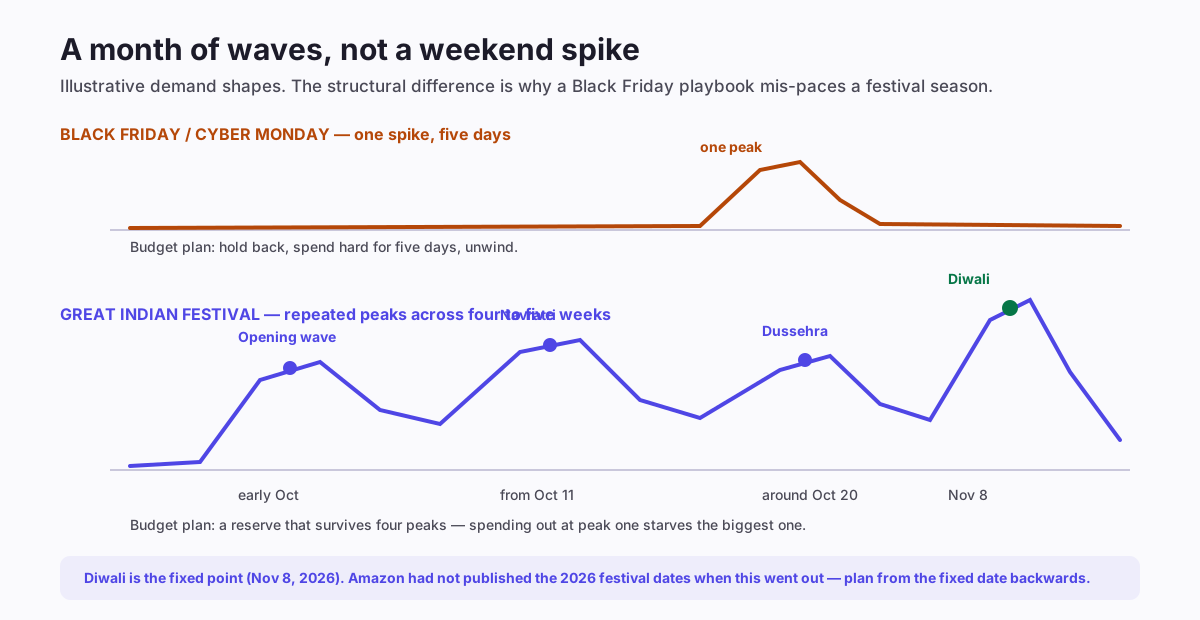
The shape of the demand curve is the whole strategic difference, and three consequences fall straight out of it:
- The reserve has to survive four peaks. A weekend event rewards spending everything you have; a month-long one punishes it. Sellers who uncap budgets in the opening wave routinely go dark for the largest peak of the season.
- Conversion rates move between waves, so bids should too. Each peak lifts conversion, and the break-even maths moves with it — a bid that was correct in the quiet week between waves is under-bid at the next peak and over-bid the day after it ends.
- Stock has to last the distance. A weekend sprint can be won on one shipment. A month of waves cannot, which is why coverage — not bidding — is usually the constraint that decides the season.
The fixed point to plan from: Diwali falls on 8 November 2026. At the time of writing Amazon had not published the 2026 festival dates, and the honest planning move is to work backwards from the date that cannot move rather than forwards from one that has not been announced.
What you can rely on, and what you cannot
Separating the two matters, because plans built on unconfirmed dates fail quietly:
Reliable. Diwali is 8 November 2026. Navratri begins around 11 October and Dussehra follows about ten days later — the cultural calendar is fixed and public, and it is what actually drives the demand waves. Amazon has separately confirmed that Prime Big Deal Days runs 6-7 October, which for a seller listing in multiple marketplaces means two events overlapping inside the same fortnight and competing for the same ad budget.
Not reliable. The festival sale's own start date, its wave boundaries, and the length of any Prime early-access window. In recent years the event has opened in the first days of October with early access for Prime members shortly before, and run in waves for several weeks — but "recent years" is a pattern, not a commitment, and building a spend plan on an exact unannounced date is how sellers end up front-loading into a week that turns out to be quiet.
The practical resolution: set your readiness deadline early and independently of the announcement. Be event-ready by the end of September. If the sale opens later than expected you have lost nothing; if it opens earlier, you are already trading.
The run-up work that actually closes
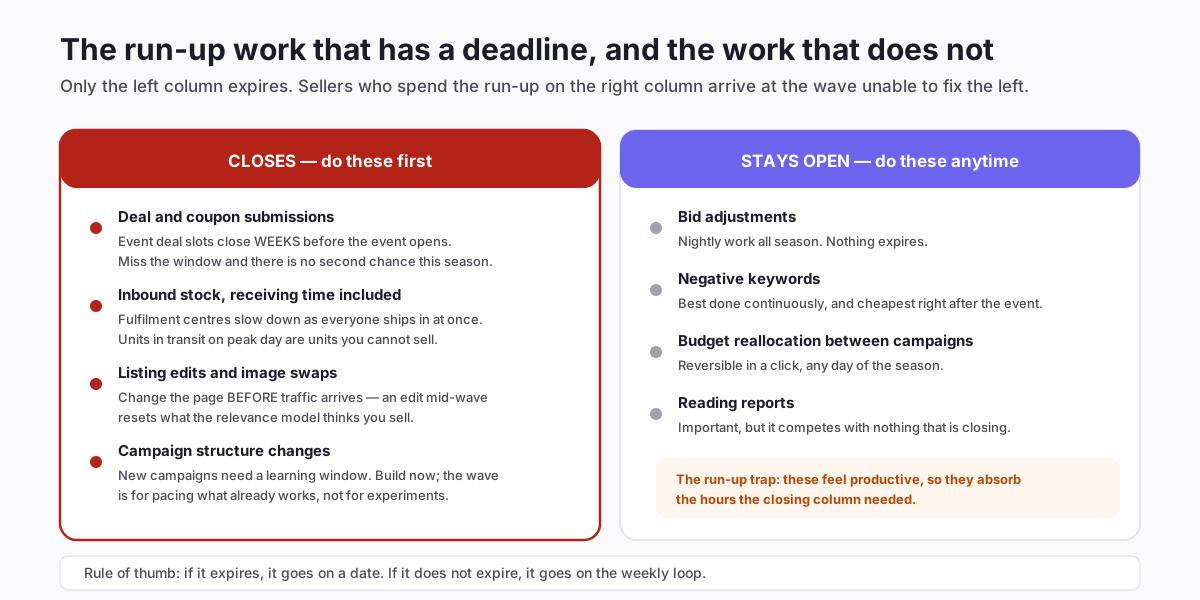
The distinction in that chart is the single most useful thing in this guide. Four tasks expire:
- Deal and coupon submissions. Event deal slots close well before the event opens. This is the hardest deadline in the season and the one most often missed, because it falls while the event still feels far away.
- Inbound stock, including receiving time. Everyone ships in at once, so fulfilment centres slow exactly when you need them fast. Units in transit on a peak day are units you cannot sell, and the coverage question has to be answered in September, not October.
- Listing edits. Change the page before traffic arrives. A mid-wave edit resets what the relevance model understands you to sell, at the worst possible moment.
- Campaign structure. New campaigns need a settling window before their numbers mean anything. Build them now; the wave is for pacing what already works.
Everything else — bids, negatives, budget shuffling, reading reports — stays open all season. That is precisely why it is dangerous: it feels productive, so it absorbs the hours the closing column needed.
Stock cover: the constraint that decides the season
Ads can only sell what is available, which makes coverage the upstream decision that every other choice depends on. Three things to get right before the first wave:
- Plan coverage per wave, not per month. A single monthly number hides the fact that demand arrives in bursts. If the opening wave sells through half your cover, Diwali gets the remainder — and the remainder is the wrong way round, because the last peak is usually the biggest.
- Decide in advance what happens when a hero runs low. The instinct is to keep advertising; the correct move is usually to step bids down so the remaining units sell at full margin rather than at deal prices with ad spend attached. Writing that rule down before the season removes the decision from a moment when you will be tired.
- Protect rank on the products you can actually supply. A stockout does not just cost the sale — it unwinds earned position, and rebuilding it costs real money afterwards. Concentrating the budget on well-covered products beats spreading it across a catalogue half of which will run dry.
The uncomfortable version of this: if coverage is thin, the right festival ad strategy is a smaller one. Advertising into a stockout converts your best demand week of the year into a rank setback.
Budget: planning for four peaks
The pacing rule that fits the shape: divide the season into its waves, give each a ceiling, and keep a reserve you refuse to touch until the last one. Concretely, for a seller who has decided the season's total spend:
- Opening wave — a deliberate but capped share. Traffic is high and competition is inexperienced; this is a good buying window, not the whole season.
- The quiet weeks between peaks — back to ordinary efficiency targets. These weeks are where over-spenders quietly bleed, running peak-priced bids against normal conversion rates.
- Navratri and Dussehra waves — step up, then step back down promptly. The step-down matters as much as the step-up; a bid raised for a peak and left there is the most common festival leak.
- Diwali week — the reserve. Guard it: this is the peak that most rewards presence, and the one most sellers reach with an empty tank.
Across accounts connecting to our platform we measure roughly one dollar in nine going to search terms that never convert — and that waste share does not politely hold steady when volume multiplies. It scales with the traffic, which is why the run-up is also the right moment to clean the account: the festival season pays out on efficiency you established beforehand, not on efficiency you intended to fix during it.
Bids through the pre-event climb
Costs start climbing before the event opens, as competitors ramp early and the auction thickens. Two failure modes bracket this period:
Ramping too early pays event prices for pre-event conversion rates — the worst trade available, and an easy one to make when the announcement is imminent and nerves are up. The defence is arithmetic: bids come off the term's own measured conversion rate and your margin, so a bid only rises when the conversion rate has actually risen.
Ramping too late means arriving at a peak under-bid, losing the impressions the peak existed to provide. The defence is a written trigger rather than a feeling — a date, or an observed conversion-rate lift, that moves you to peak bids.
Between those, the ordinary discipline still applies: judge on settled data rather than the last two days, because a fast-moving event makes fresh numbers look worse than they are and invites panic edits at exactly the wrong hour. Every change logged, with its reason — a festival season generates enough edits that an unlogged account becomes unreadable by November.
The listing work that earns most
Festival traffic multiplies whatever the page already does, in both directions — which makes conversion work the highest-leverage run-up task after stock. What pays:
- The main image, above everything. Shoppers comparing tiles on a crowded results page decide there first, and festival browsing is comparison-heavy by nature.
- Price position relative to the page you actually appear on. Not the lowest — the credible one. During a deal event the reference point shifts, and a page that looked well-priced in September can read expensive next to event pricing.
- Completeness for the questions shoppers ask. Sizes, compatibility, what is in the box, delivery expectations. Unanswered questions cost more conversions during a rush than at any other time, because nobody is in the mood to investigate.
- Honest deal presentation. Whatever promotion you run should be legible in seconds. Confusion during a peak does not get a second visit.
The general advertising principle holds with extra force here: acquisition multiplies what exists. A festival season is the most expensive possible moment to discover your listing does not convert.
A worked pacing example
Numbers make the reserve discipline concrete. Take a seller who has decided to spend a season total of $4,000 across roughly five weeks, on a product carrying about 30% margin — so ads may take up to 30% of an attributed sale before that sale stops earning.
- Opening wave (~week 1): $900. Bids near the top of the break-even range while conversion is genuinely elevated. Capped — when it is spent, it is spent.
- Quiet week (~week 2): $400, bids back to ordinary efficiency levels. This is a maintenance week, not a growth week, and treating it as one protects the rest.
- Navratri and Dussehra waves (~weeks 3-4): $1,100 combined, stepped up at each peak and stepped back down within a day or two of it passing.
- Diwali week (~week 5): $1,600 — the largest single allocation, deliberately reserved. It is the biggest peak and the one worth arriving at with room to bid.
The point is not the specific split, which depends on your category and coverage. It is that the largest allocation sits on the last peak and is protected from the first one. Every festival post-mortem where a seller says "we ran out of budget too early" is the same mistake: a month-long event paced like a weekend.
Running the season without living in the console
Everything above splits cleanly into decisions and execution. The decisions are yours and they belong in the run-up: how much the season gets, which products deserve it, where the reserve sits, what happens when a hero runs low. The execution — nightly bid steps as conversion rates move through each wave, negatives on terms the extra traffic exposes, budget caps holding, coverage alarms firing before a stockout rather than after — is mechanical, relentless, and exactly the part human attention drops during the busiest weeks of the year.
That is the case for systematising the execution half before the wave rather than during it: AIAdKing runs the nightly cycle on each term's own settled evidence, with every action logged and its reason attached, at a flat fee that does not rise with your festival spend — and a preview mode so you can watch what it would do before letting it act. However you run it, get the closing column done in September. The festival season pays out on preparation; by the time the wave arrives, the decisions that mattered have already been made.