
The deadline pattern: everything locks 3-8 weeks early
Amazon's Q4 deadlines move a little each year, but their structure doesn't: every gate closes weeks before the shopping moment it controls. Deal submissions for Black Friday week close earliest — often while sellers are still thinking about summer. FBA inbound cutoffs land in early-to-mid November, weeks before the Turkey 5 (Nov 26-30 in 2026). Even December has one: the last arrival-before-Christmas shipping dates, after which gift-intent conversion falls off a cliff.
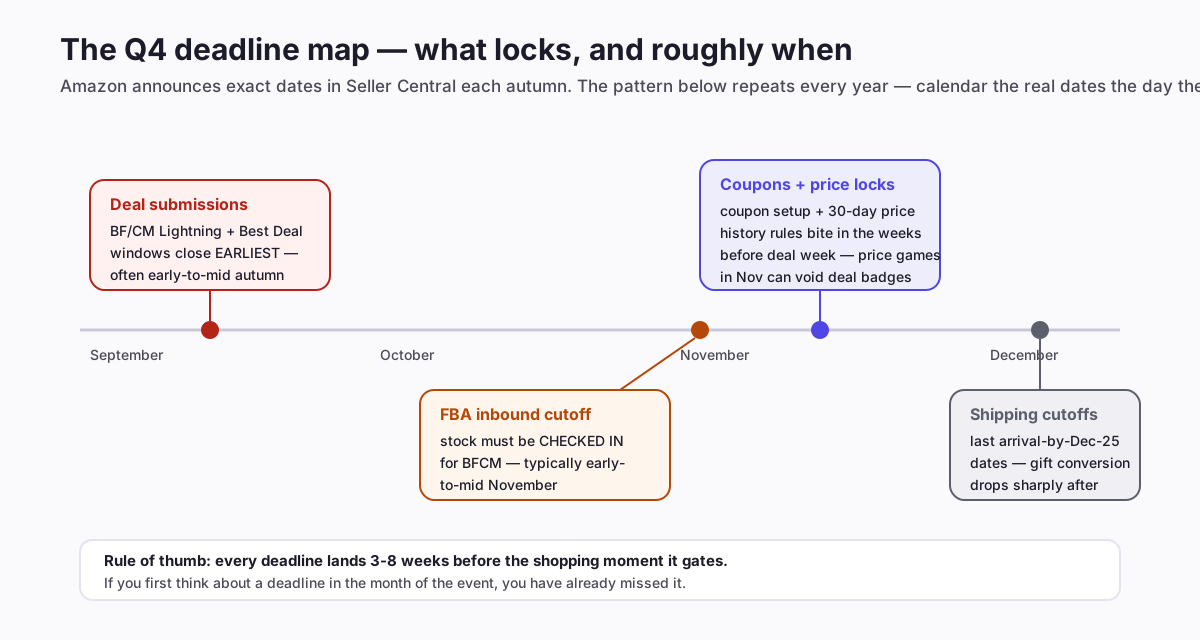
The operating rule this implies: the day Amazon announces a date in Seller Central, it goes in your calendar with a personal deadline one week earlier. Approval queues lengthen near every cutoff, and a submission that bounces for a fixable reason needs runway to be resubmitted.
Deadline 1 — deal submissions (the earliest, and the most missed)
Lightning Deals and Best Deals for Black Friday/Cyber Monday week come from a submission window that closes far ahead of the event — historically often before mid-autumn. Miss it and no amount of November effort gets the badge back.
Three practical notes beyond the date itself:
- Eligibility is a moving target. Deal eligibility depends on rating, deal-price rules against recent price history, and stock levels at review time. A product that qualified in September can fail final checks in November if its price wandered or stock thinned — see the price-history deadline below, because these two interlock.
- Submitted is not scheduled. Deals pass through review; some get moved, trimmed or dropped without much fanfare. Re-verify status in Seller Central during the week before the event — the fourth quadrant of the ads-sync matrix below exists because sellers skip this check.
- Coupons are the fallback lane. If the deal window is already closed as you read this, coupons and Prime-exclusive discounts have later setup windows and still produce a badge effect on the search page. Not as strong as a Lightning Deal — far stronger than full price.
Deadline 2 — FBA inbound cutoff (checked in ≠ in transit)
Amazon publishes a date by which inventory must be received and sellable — not shipped, not "at the fulfilment centre gate" — to be safely available for BFCM. It typically lands in early-to-mid November, and it's the deadline with the nastiest failure mode, because receiving times stretch exactly as the date approaches: every seller in the marketplace ships at once, and a shipment that checks in within days in August can sit in receiving for two weeks in early November.
Treat the announced date as the latest arrival, and work backwards through your supplier and freight lead times now. Your restock forecast should answer one question per product: how many sellable units will be checked in by the cutoff, at event velocity? If the honest answer is "not enough", that changes your ads plan (quadrant two below) — better to know in October than discover it via a stranded-stock scramble in deal week.
Deadline 3 — the price-history rules (the invisible one)
Deal prices and coupon discounts are validated against your product's recent price history — rules designed to stop fake discounts. In practice this means your November deal economics are set by your September-October pricing behaviour: raise the price in the weeks before the event to make the discount look bigger, and the deal can be invalidated or the badge suppressed.
The safe pattern is boring: hold a stable price through autumn, price the deal honestly against it, and fold the discount into your deal-price break-even before committing (the BFCM checklist works a full example — a 25% discount can nearly halve the ACoS a product can afford). If you run a repricer, this is also the moment to set its floors consciously for deal week; an automated price war in mid-November can both cost you the Buy Box and disturb the very price history your deal was validated against.
Syncing ads to deal status: the four quadrants
A deadline post that stops at dates misses the operational half: every deal outcome should re-shape the product's advertising. The matrix:
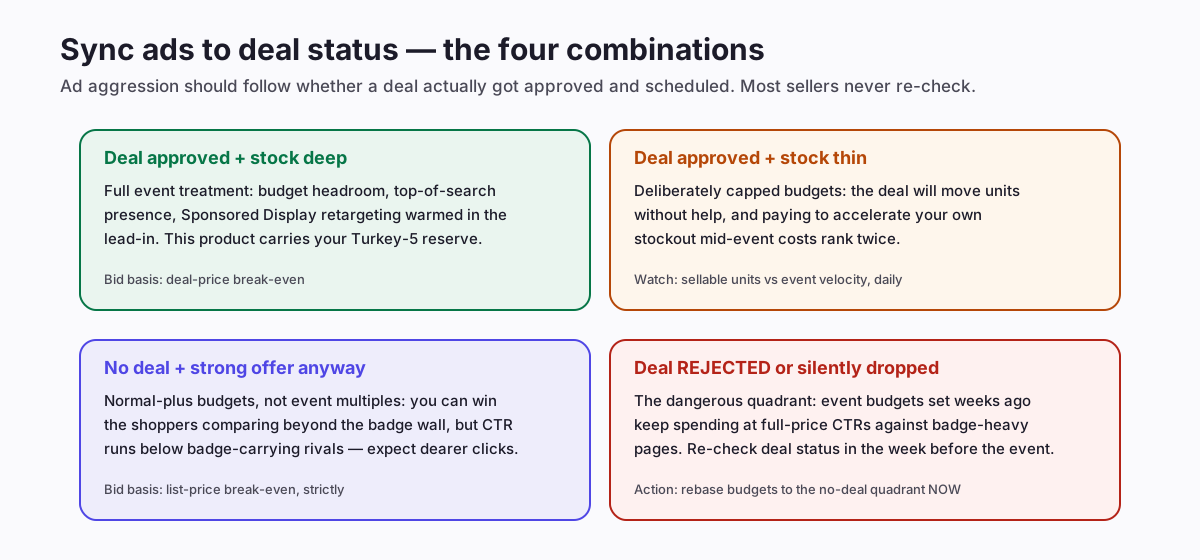
The killer quadrant is the fourth: a deal that was rejected or silently dropped after event budgets were set. The campaign then spends Black Friday money on full-price CTRs against a wall of badge-carrying competitors — the quietest way to torch a reserve. The fix costs five minutes: re-check every deal's status in the week before the event, and rebase any orphaned campaign to no-deal budgets.
Deadline 4 — December shipping cutoffs (the exit ramp)
The season's last gate isn't about getting in — it's about knowing when to leave. Amazon surfaces last-arrival-by-Dec-25 dates for FBA (Prime delivery promises hold late, but not forever) and they mark a behavioural cliff: once shoppers stop believing a gift arrives in time, gift-intent conversion drops sharply within days.
For advertising this is the signal to take the December glide down decisively — the Q4 pacing guide covers the full shape. Products with January relevance (fitness, organisation, returns-season consumables) step down to normal; pure gift items step down harder. Riding December budgets through the cutoff "because the month isn't over" pays peak-season attention prices for post-season intent.
A tracking system that survives a busy Q4
Knowing the deadlines and hitting them are different skills. The sellers who never miss share a simple system:
- One calendar, three alarm tiers. Every announced date gets three entries: an action alarm a week early (do the thing), a verification alarm two days early (confirm the thing happened — deal shows scheduled, shipment shows receiving), and the date itself as a hard stop. The verification tier is the one most sellers skip and the one that catches silent failures — a deal dropped in review, a shipment stuck at a carrier.
- Deadlines owned by name. In any team bigger than one, "we knew about it" is how dates die. Each deadline has exactly one owner, even if the team is you and a VA.
- A weekly ten-minute sweep. Every Monday from September through December: open the deal dashboard, the shipment queue and the announcements feed; update the calendar with anything new. Ten minutes weekly beats the annual tradition of discovering a closed window from a competitor's badge.
- Ads wired to the calendar. Each deadline's outcome maps to an ads action (the quadrant matrix above). Write the mapping next to the calendar entry when you create it — "if rejected → rebase budgets same day" — so the response is pre-decided rather than improvised during the busiest week of the year.
None of this is sophisticated. That's the point: Q4 punishes sophistication that depends on free attention, and rewards dumb systems that run without it.
The one-page deadline checklist
- Today: open Seller Central's deal dashboard and news feed; calendar every announced Q4 date with a personal deadline one week earlier.
- Immediately after: submit BF/CM deal candidates (or set up coupons if the window has closed); freeze autumn prices on deal products.
- Working backwards from the inbound cutoff: place supplier orders and book freight so units are checked in, not in transit, by the date.
- Week before the event: re-verify every deal's scheduled status; rebase ads on any rejected/dropped deal (quadrant 4); set repricer floors consciously.
- Event week: run the BFCM checklist — this page's job is done.
- Mid-December: take the glide-down at the shipping cutoff, not at the month's end.
If keeping campaign behaviour in lock-step with deal status, stock cover and calendar events sounds like a part-time job — it is, and it's the part AIAdKing automates: nightly budget and bid decisions that already account for what's live, what's scheduled and what stock can support, each change logged with its reason and previewable in shadow mode. Flat fee, no share of your event spend.